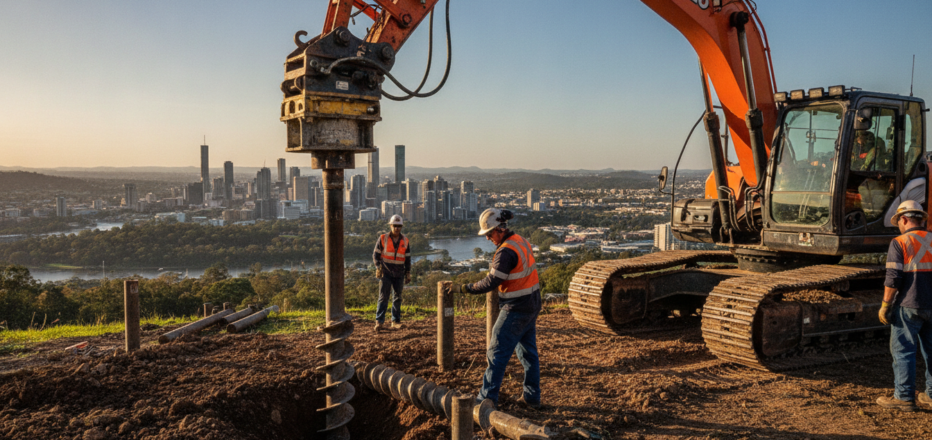
18A Iris Place, Acacia Ridge, Brisbane QLD 4110 PO Box 31, Acacia Ridge DC QLD 4110 07 3713 4900
East Coast Group Menu
  • Home
  • About Us
  • Our Companies
  • Our Services
    • Structural Engineering
    • Soil Testing & Design
    • Timber Piles
    • Steel Screw Piles
    • Retention Piles
    • Bored Concrete Piles
    • Anchoring
    • Specialty
  • Areas We Serve
    • Sunshine Coast, QLD
      • Soil Testing & Design
      • Timber Piles
      • Steel Screw Piles
    • Gold Coast, QLD
      • Soil Testing & Design
      • Timber Piles
      • Steel Screw Piles
    • Brisbane, QLD
    • Regional Queensland
    • Northern New South Wales
  • Gallery
  • Blog
  • Contact Us

Author

screw piling brisbane

Why Screw Piling is Brisbane’s Smartest Foundation Choice

Nearly 40 per cent of properties in South East Queensland sit on reactive clay soil. This soil is a hidden enemy that causes cracked walls and uneven floors. If you’ve seen a new slab crack within a year, you know how frustrating traditional footings can be.

Welcome to a real local case study where conventional concrete footings simply didn’t cut it.

Imagine a sloping block, stubborn drainage issues, and clay that shifts with every wet season. That’s what one homeowner faced before finding screw piling brisbane solutions.

This helical pier approach has become the go-to for tricky sites in the region. It works with the soil, anchoring deep into stable ground beneath the moisture-affected layer above.

Stick with us as we explore how this project unfolded. We’ll look at the challenges the team faced and why this foundation method might be the answer you’ve been searching for too.

Key Takeaways

  • Reactive clay soil across South East Queensland causes serious structural issues for homes built on traditional concrete footings.
  • Helical pier solutions offer a dependable alternative for sloping blocks, poor drainage, and shifting ground conditions.
  • This foundation method anchors into stable soil layers, bypassing unstable surface conditions entirely.
  • Real-world case studies show how this approach solves problems traditional footings simply can’t fix.
  • Homeowners throughout the region are increasingly choosing this technique for tricky, problematic sites.
  • The method works faster and causes far less disruption than conventional footing installation.
  • Understanding your soil conditions early can save significant time, money, and stress down the track.

1. A Brisbane Foundation Problem That Needed a Smarter Fix

Sloping blocks and coastal soil can turn a dream home into a nightmare. This is common in suburbs like Wynnum, Manly, and the Redlands every year.

One local homeowner knew this all too well. Their block sloped gently near the bay, with soft, sandy soil that never settled. They worried about using standard concrete footings.

Heavy rain made things even worse. Water would pool around the site after every storm, seeping into low spots. This was where a slab would sit, and cracks were already forming in a neighbour’s house.

The homeowner wanted something better. They needed a foundation that could handle the slope, keep water away, and not ruin their yard.

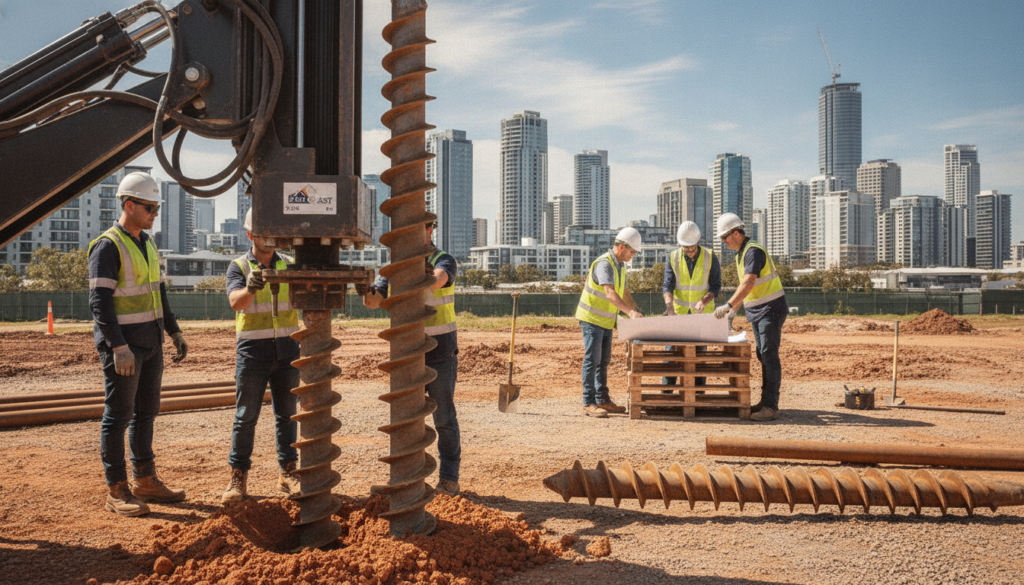
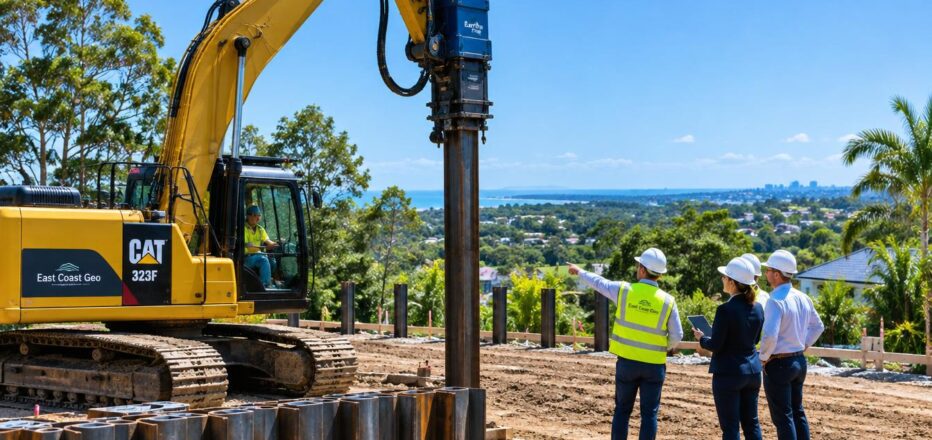
Screw pile foundations being installed in Brisbane, showcasing a construction site with workers in professional attire, focused on the screw piles being driven into the ground. In the foreground, an up-close view of the screw pile machinery with clear details of the screws and hydraulic equipment. The middle ground features a team of engineers examining a blueprint, surrounded by soil and tools, highlighting teamwork and precision. The background captures a typical Brisbane skyline with residential buildings, under a bright blue sky with gentle clouds, emphasizing the importance of modern infrastructure. Soft natural lighting enhances the scene, conveying a sense of innovation and progress in foundation work. Include the brand name "East Coast Geo" subtly integrated into the scene, reinforcing local expertise in screw piling solutions.

They found the solution in screw pile foundations. Brisbane builders were recommending them for tricky sites like theirs. A raised pier foundation, anchored with screw piles, was exactly what they needed.

This method uses vertical supports driven into the ground instead of a solid slab. It lifts the home above problem areas, lets water drain naturally underneath, and disturbs less soil during installation.

For a family tired of watching neighbours deal with cracked slabs and pooling water, it was the smarter fix they’d been searching for. The rest of this story shows how that fix came together.

2. Understanding the Site Challenges Behind the Project

This block had soil and drainage problems common in Brisbane. The team needed to understand the underground issues before finding a solution. A simple look wasn’t enough.

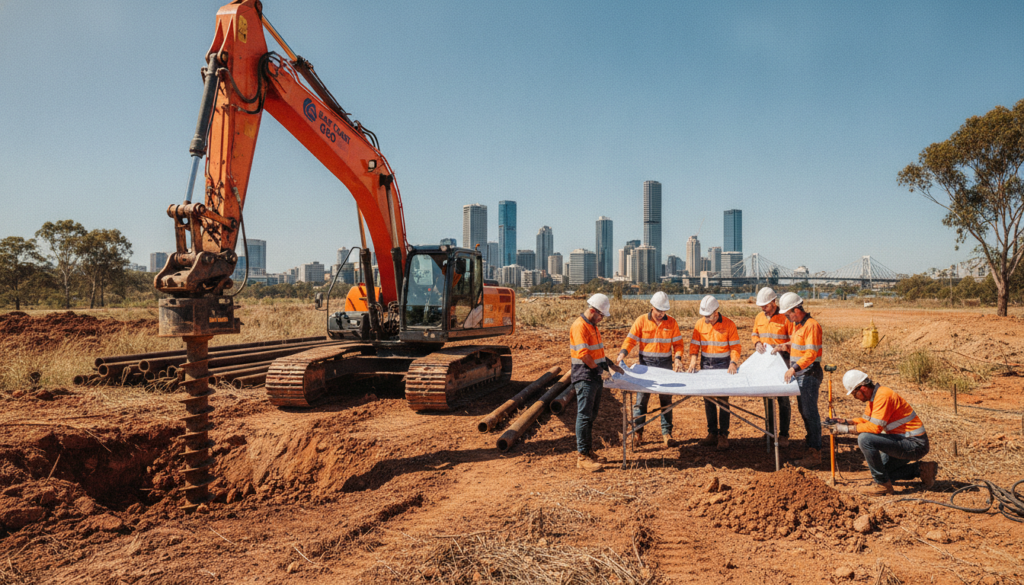
A bustling screw piling site in Brisbane, showcasing heavy machinery and workers in professional attire engaging in the process. The foreground features a large excavator drilling into the rugged terrain, with piles being positioned for installation. In the middle ground, several workers consult blueprints under the bright sunlight, while one measures soil conditions next to a test pile. The background displays Brisbane's signature skyline under a clear blue sky, adding context to the location. The atmosphere is industrious, highlighting the challenges of the site with a focus on soil composition and nearby vegetation. The lighting is bright and vibrant, emphasizing the activity. Include the logo "East Coast Geo" subtly integrated into the machinery's design, reflecting a professional and cohesive aesthetic.

2.1 Soil Conditions and Drainage Issues

Brisbane’s soil is very reactive clay. It swells when wet and shrinks when dry. This movement puts pressure on foundations.

Poor drainage made things worse. Water collected in low spots after rain, making the ground soft where it needed to be stable.

Soil tests showed the problem’s size. Without these tests, foundations might assume the wrong soil type. But this site was different, and this discovery changed the foundation plan.

  • Reactive clay that expands and contracts with moisture
  • Slow-draining sections that stayed wet long after rainfall
  • Default soil assumptions that didn’t match the real ground conditions

2.2 Why Traditional Concrete Footings Fell Short

Concrete footings need stable ground to last. The soil test results showed this site wasn’t stable.

Reactive clay causes concrete footings to crack. This happens as the ground swells and contracts with the seasons. Homeowners might see hairline cracks in walls or doors that won’t close right.

Traditional footings need deep excavation, which harms the soil. Brisbane’s wet weather makes curing concrete even harder. It needs several dry days to set properly.

These risks made concrete footings a bad choice for this block. It’s why many builders choose screw piling in Brisbane. The story continues from here.

3. What Is Screw Piling Brisbane Homeowners Are Choosing

Imagine a giant steel corkscrew being twisted deep into the earth. That’s how screw piling works. Instead of digging and pouring concrete, a steel shaft with helical blades is wound into the ground. It grips the soil instantly, giving your home a solid anchor without weeks of waiting.

Many Brisbane builders and homeowners are making the switch. It’s quicker, proven, and handles the region’s clay soils better than old methods.

How Helical Piling Brisbane Technology Works

Helical piling brisbane technology uses a simple mechanical principle. A steel shaft with helical plates is rotated into the ground like a screw. As it turns, the helix bites into the soil, pulling the pile deeper.

Since it’s mechanical, there’s no need to wait for concrete to cure. The pile is ready to bear loads the moment it’s installed, saving time in any build.

Every pile in South East Queensland is made from high-grade Australian steel. This steel is treated to resist corrosion, standing up to Brisbane’s damp conditions and moving or waterlogged soil.

Screw piles can support loads from 5 tonnes to 250 tonnes. This range covers small deck extensions to large multi-storey homes.

“Screw piles reach their full load-bearing capacity the moment installation is complete, removing the waiting period that concrete curing usually demands.”

Key Components of Screw Pile Foundation Systems Brisbane Wide

Screw pile foundation systems in Brisbane are made from a few key parts. Each part plays a role in keeping your home stable and protected from ground movement.

Component Function Material/Feature
Steel Shaft Transfers structural load down into stable soil layers Corrosion-resistant Australian steel
Helical Plates Create mechanical grip and pull the pile into the ground Welded steel discs along the shaft
Bracket Connections Link the pile to bearers, joists, or slab framing Adjustable steel brackets
Pile Cap Distributes load evenly across the top of the pile Flat steel plate or reinforced fitting

These parts create a raised pier foundation that lifts your home above ground. This setup allows for flexible height adjustments on sloped or uneven blocks, something concrete slabs can’t offer.

It also means less digging and soil disturbance during installation. Your yard, drainage lines, and landscaping stay mostly untouched, a big plus for renovating an established Brisbane property.

4. The Screw Pile Installation Process, Step by Step

Ever wondered how screw pile installation works on your property? From the first visit to the final check, it’s a clear process.

The steps are straightforward. Each one builds on the last, ensuring your foundation is solid before moving on.

Screw piling is different from traditional methods. It doesn’t rely on guesswork or long waits. You see real results at each stage.

4.1 Site Assessment and Engineering Design

First, a detailed site inspection is done. It checks the soil, moisture, and drainage.

This info helps create a custom pile design. Every property is unique, so no two designs are the same.

Good installers provide in-house certifications for your design. This proves your foundation meets standards before construction starts.

4.2 Installing the Screw Piles

After the design is set, the installation starts. Specialised equipment drives the piles into the ground with controlled pressure.

This method is less invasive than traditional footings. It doesn’t require big trenches or wet concrete across your property.

The installation process is as follows:

  1. Positioning the rig at each marked pile location
  2. Driving the helical pile to the engineered depth
  3. Monitoring torque readings during installation
  4. Recording data for each pile as it’s installed

The process is also quieter than a concrete pour. Your neighbours will likely appreciate the lower noise levels.

4.3 Quality Checks and Load Testing

Screw piling stands out because load testing can start right after installation. There’s no need to wait for curing.

During installation, torque readings provide instant feedback. This allows for on-the-spot adjustments, not after the fact.

Traditional footings can’t offer this level of immediate verification. You’d usually wait weeks to see if the foundation works as expected.

Foundation Type Testing Timeline Feedback During Install
Screw Piles Immediate Continuous, real-time
Concrete Footings Weeks (after curing) None
Timber Stumps Days (after settling) Minimal

This ongoing monitoring gives you peace of mind from the start. You’ll know your foundation is strong before your build even begins.

5. Results That Speak for Themselves

This project showed amazing results from start to finish. The homeowner got a strong foundation that worked well for years. Here’s what made it stand out.

5.1 Faster Build Timeline

Screw piling made the foundation stage quick. No waiting for concrete to dry or worrying about the weather. This speed kept the build moving smoothly.

After installing the piles, the site was ready for the next step. This fast pace kept everyone on schedule.

  • No curing time needed before construction could continue
  • Installation unaffected by most weather conditions
  • Piles carry load capacity straight after they’re driven in
  • Minimal site preparation compared to excavation-heavy concrete footings

In Brisbane, this meant avoiding delays. Days were saved, and the build stayed on track.

5.2 Long-Term Stability Outcomes

Speed is important, but lasting performance is key. Steel screw piles are built to last. They resist corrosion, soil movement, and water, common threats to foundations.

Since installed, the piles have withstood Brisbane’s wet seasons and reactive clay soils. There’s been no movement, cracking, or settling issues.

Factor Traditional Concrete Footings Steel Screw Pile System
Corrosion resistance Can degrade over decades, specially in damp conditions Galvanised steel resists rust for 50+ years
Soil movement Prone to cracking on reactive clay soils Piles anchor deep, staying stable through soil shifts
Water exposure Moisture can weaken concrete over time Steel handles saturated ground without losing strength

For the homeowner, this means peace of mind. A strong foundation is something you don’t think about again. With screw piles, they haven’t had to.

6. Breaking Down Screw Piles Cost Brisbane Homeowners Can Expect

Understanding the cost of screw piles in Brisbane is key to planning your project. It’s important to know where your money goes when choosing a foundation system.

The cost of screw piles is clear once you understand what affects it. Let’s break down the costs so you can budget accurately.

6.1 Cost Comparison With Concrete Footings

Concrete footings might seem cheaper at first, but they often come with hidden costs. Excavation, formwork, curing time, and disposing of spoil add up quickly.

Screw piles, on the other hand, are simpler. They require little digging and no concrete, saving on materials and labour.

Here’s a comparison of the two:

Cost Factor Screw Piles Concrete Footings
Excavation Required Minimal to none Extensive
Material Costs Lower (no bulk concrete) Higher (concrete, steel mesh, formwork)
Labour Time 1–2 days for most homes Several weeks including curing
Weather Delays Rarely affected Common, specially during Brisbane’s wet season

Considering the reduced excavation, less concrete, and quicker labour, many find screw piles cost-effective. They can even be cheaper than traditional systems over time.

6.2 Factors That Influence Pricing

Every project is unique, so screw piles cost in Brisbane can vary. Here are the main factors that affect your quote:

  • Site accessibility: Difficult sites can increase labour costs.
  • Soil conditions: Hard or unstable ground may need special tools or deeper piles.
  • Load-bearing capacity: Piles for heavy structures cost more.
  • Number of piles needed: Larger homes need more piles.
  • Project complexity: Complex designs or extensions add to the cost.

Your final cost will depend on your site’s specifics. A simple renovation on stable soil is cheaper, while complex projects cost more.

Despite the initial cost, many homeowners see long-term savings. Fewer repairs, less maintenance, and a strong foundation against Brisbane’s soil shifts all contribute to savings.

“The cheapest foundation isn’t always the one with the lowest quote—it’s the one that doesn’t need fixing five years later.”

Getting a detailed quote from your installer helps you understand how these factors apply to your project.

7. Why More Homeowners Across South East Queensland Are Making the Switch

Word about screw piling in South East Queensland has spread fast. It’s now popular from Redcliffe to Robina and everywhere in between. What started as a smart fix for one tricky Brisbane block has turned into a region-wide shift in how homes get built.

Builders and homeowners alike are noticing the same pattern. Once you understand why screw piling works so well here, it’s easy to see why the demand keeps growing.

7.1 Screw Piling South East Queensland Climate and Terrain Benefits

South East Queensland throws a lot at your foundations. You’ve got sandy coastal blocks on the Gold Coast, reactive clay soils further inland, and low-lying areas around Logan and Ipswich that flood after heavy rain.

Screw piling handles all of it without breaking a sweat. The piles adjust to soil type and depth on site, so you don’t need a completely different foundation plan for a beachside block versus a suburban one near Brisbane’s west.

Weather is another factor. South East Queensland’s storm season brings sudden downpours that can delay concrete pours for days. Screw piles install in almost any weather, which keeps your build moving even when the forecast doesn’t cooperate.

This flexibility matters most in flood-prone zones, where raising a home on screw piles helps keep living spaces above potential water lines. It’s a practical answer to a genuine regional risk.

7.2 Environmental and Practical Advantages

Beyond strength and speed, screw piling brings real environmental benefits. Installation disturbs very little of the surrounding land, so you protect trees, gardens, and neighbouring properties during the build.

There’s also a lower carbon footprint involved. Screw piling needs far less heavy machinery than digging and pouring concrete footings, which cuts down on fuel use and emissions across the job site.

Your construction crew benefits too. Fewer deep excavations mean safer working conditions, with less risk of trench collapse or soil instability during installation.

Noise and disruption drop significantly as well, which matters if you live in a built-up suburb or close to neighbours. Screw piling helps builders meet environmental regulations while still delivering a durable, long-lasting foundation.

Factor Screw Piles Concrete Footings
Excavation Required Minimal, targeted holes only Extensive trenching across site
Site Disturbance Low impact on surrounding land Significant soil and vegetation disruption
Machinery Use Compact rigs, lower fuel consumption Heavy excavators and concrete trucks
Weather Dependency Installs in most conditions Delayed by rain and curing time
Noise Levels Quieter installation process Louder digging and pouring stages

This combination of practical strength and lower environmental impact explains why screw piling south east queensland adoption keeps climbing. You get a foundation built for local conditions while making a choice that’s kinder to your property and the wider environment.

8. Choosing the Right Screw Pile Installers Brisbane Wide

Choosing who installs your screw piles is as important as the design itself. Your foundation is a big deal, so pick wisely.

The right team can make a huge difference. A good contractor is like a trusted surgeon or mechanic. They should have a proven track record, not just a good sales pitch.

8.1 What to Look for in Screw Piling Contractors Brisbane

Not all companies can handle Brisbane’s soil challenges. When looking for screw piling contractors, look for a few key things.

Experience is key. A contractor familiar with Brisbane’s soil types will know how to handle different conditions.

Look for in-house engineering certifications. This means your piles are designed for your site, not a generic template. It also means faster work, with no delays for outsourced designs.

Material quality is also crucial. Choose contractors using high-quality Australian steel piles. These are built for local conditions and come with a reliable warranty.

What to Look For Why It Matters
Proven local experience Understands Brisbane’s soil variability and drainage challenges
In-house engineering certification Faster, site-specific pile design with fewer delays
Australian made steel piles Stronger corrosion resistance and long-term reliability
Detailed site inspections Reduces risk of costly surprises during installation

8.2 Questions to Ask Before You Hire

Before you sign, ask some important questions. This can save you from unexpected costs or delays.

  • What does your load testing process involve, and can I see the results?
  • How long will installation take from start to finish?
  • What warranty terms come with your steel piles and workmanship?
  • Do you offer post-installation monitoring or support if issues arise?
  • Will my project include a detailed site inspection before any design work begins?

“A good contractor won’t just answer your questions confidently. They’ll welcome them, because it shows they have nothing to hide about their process.”

A reliable team will handle everything from the first site visit to ongoing support. This includes inspections, custom piles, full installation, and monitoring after the job is done.

If you want trusted screw pile installers in Brisbane, call us on 07 3713 4900. Our team will guide you through the process, answer all your questions, and ensure your foundation lasts.

9. Lessons Learned From This Case Study

Real Brisbane builds teach us what’s key for lasting foundations. This project showed us real lessons, from soil tests to final sign-off. Here’s what we learned, and some tips for your project.

9.1 What Worked Well

Speed was a big win on site. Crews installed and tested piles in days, not weeks. This kept the project on track.

Getting immediate feedback from load tests was a highlight. Engineers could check pile capacity right away. This gave everyone confidence to move forward.

Keeping the site tidy was another plus. No excavation or concrete pours meant the garden and driveway stayed intact. Neighbours barely noticed the work.

The foundation’s stability has been impressive. Regular checks show no settling or cracking, even in Brisbane’s wet months. A good foundation should perform quietly and reliably.

  • Installation completed in days rather than weeks
  • Instant load test results confirmed pile capacity on site
  • Garden beds, driveway, and surrounding areas left undisturbed
  • No settling or cracking reported in the months since
What Happened Why It Mattered Result
Piles installed and tested in days Kept the build schedule tight and predictable Faster handover to the next construction stage
On-site load testing Removed guesswork around pile capacity Confident sign-off with no delays
No excavation or concrete pours Protected landscaping and neighbouring properties Minimal mess and complaints during the build
Ongoing monitoring after completion Confirmed the foundation was performing as designed Zero settling or cracking to date

9.2 Advice for Your Own Project

Start with a proper soil assessment for your foundation project. Brisbane’s soil can be tricky. A geotechnical report saves you trouble and money later.

Choosing the right contractor is crucial. Look for teams with engineering credentials and a good track record. A cheap quote can cost more in the long run.

A foundation built for Queensland conditions offers peace of mind. Screw piling handles moisture and humidity better than old methods. It protects your investment for years.

A foundation is only as strong as the ground it’s built on, and getting that right from the start makes everything else easier.

  • Book a geotechnical soil assessment before any design work begins
  • Ask contractors for engineering certifications and past project references
  • Weigh up Queensland’s climate and soil type, not just the upfront price tag

Use these lessons to make your project run smoothly.

10. Conclusion

Brisbane homes need strong foundations to withstand our soil and weather. Screw piling brisbane provides just that. This case study shows it works in real life, not just in theory.

A tricky block with poor drainage and unstable soil became a solid build. The screws were installed quickly, and the project stayed on schedule. Homeowners got a foundation that will last for decades, avoiding the problems of traditional concrete footings.

Speed is important when building. But durability is key once you move in. And cost-effectiveness makes the project easier to handle. Screw piling meets all these needs while being kinder to the environment than older methods.

If your block has soft ground, drainage issues, or tricky terrain, screw piling brisbane might be the solution. It’s a reliable method supported by engineering. It’s helping homeowners in South East Queensland build with confidence, not uncertainty.

Your project needs a foundation that’s reliable. Call our team on 07 3713 4900 to discuss your site’s needs. We’ll explain the process, answer your questions, and see if screw piling is right for your build.

FAQ

What makes screw piling Brisbane homeowners’ preferred choice over traditional concrete footings?

Screw piling in Brisbane is quick and doesn’t need time to cure. This means your building work can keep going without pause. It also handles Brisbane’s tricky clay soils better than traditional footings, avoiding cracks and movement.

How does helical piling Brisbane technology actually work?

Helical piling in Brisbane uses steel shafts with helical blades. It screws into the ground like a giant corkscrew. This method gives instant strength without digging or pouring concrete. The piles can hold from 5 to 250 tonnes, depending on your project’s needs.

Are screw pile foundations Brisbane wide suitable for all soil types?

Screw pile foundations are great for Brisbane’s reactive clay, sloping blocks, and areas prone to flooding. But, it’s key to test the soil first. This ensures your engineer can design the right pile solution for your site.

What’s included in screw pile foundation systems Brisbane installers typically use?

A system includes steel shafts, helical plates, and bracket connections. These parts form a raised pier foundation. This setup offers flexible heights and minimises soil disturbance.

How much do screw piles cost Brisbane homeowners on average?

Screw pile costs in Brisbane vary by site, soil, load needs, and pile numbers. While initial costs might be higher, reduced digging and labour often make it cheaper. Plus, it’s more durable in the long run.

How long does a typical screw pile installation take compared to concrete footings?

Screw pile installation is much quicker than concrete footings. There’s no curing time, so projects avoid delays from weather or soil issues. This keeps your build on schedule.

Can screw piles be load tested immediately after installation?

Yes, which is a big plus. Screw piles can be tested right away. This gives you confidence in your foundation’s strength from the start.

Why are screw piling contractors Brisbane wide seeing such a surge in demand?

More people in Brisbane are choosing screw piling for its benefits on tricky sites. It’s faster, causes less disruption, and is more stable. Once they understand it, it’s an easy choice.

What should I look for when choosing screw pile installers Brisbane offers?

Look for installers with experience, engineering certifications, and a history of site inspections and custom designs. Also, check if they use quality Australian steel and offer support after installation.

Is screw piling south east Queensland wide a good fit for coastal properties?

Absolutely. Screw piling is perfect for coastal and flood-prone areas in south east Queensland. The steel piles resist corrosion and water well, offering peace of mind.

Does screw piling have environmental advantages over traditional foundation methods?

Yes, it has. Screw piling needs less digging and machinery, lowering carbon emissions and site disturbance. It’s a greener choice without sacrificing strength or durability.

What questions should I ask before hiring a screw piling contractor?

Ask about load testing, installation times, warranties, and support after the job. For clear answers, call 07 3713 4900 to talk to experts who can guide you through the process.

September 6, 2026 Comments (0) Uncategorized

Read more

reactive soil foundation design brisbane

Navigating Brisbane’s ‘Blackjack’ Clays: How Reactive Soil Impacts Your Foundation Design and Build

Imagine nearly 20 per cent of Australian homes sitting on ground that changes with the seasons. Many of these homes are in Queensland’s capital. This is why local builders often talk about “blackjack” clay when planning a new build or renovation.

This ground type gets bigger when it’s wet and smaller when it’s dry. It can move by several centimetres in just one year. This movement puts a lot of pressure on slabs, footings, and walls.

Getting the groundwork right is crucial. It’s not just a technical task for engineers. It’s what keeps a house solid for generations, not one that gets damaged in a few years.

This article shares a real case from a Brisbane build. It shows how careful engineering kept a home safe from clay movement. By the end, you’ll know how to protect your property, whether you’re building or renovating.

Key Takeaways

  • Queensland’s “blackjack” clay changes with moisture, affecting slabs and footings.
  • Bad groundwork can cause cracked walls, sticking doors, and expensive repairs.
  • Good engineering keeps your home safe from seasonal ground movement for decades.
  • A local build case study shows how proper planning avoids structural damage.
  • Knowing your block’s clay helps you make better building and renovation choices.
  • Investing in quality groundwork saves money and stress in the long run.

1. What Is Blackjack Clay and Why Does It Matter for Brisbane Homes?

Imagine soil that swells like a sponge after rain, then shrinks and cracks under the summer sun. That’s blackjack clay in a nutshell.

This dark, sticky soil sits beneath many Brisbane properties. It behaves differently than sandy or rocky ground. If your home is built on this clay, knowing how it moves is key to protecting your investment. That’s why reactive soil brisbane conditions are a big topic among builders, engineers, and homeowners.

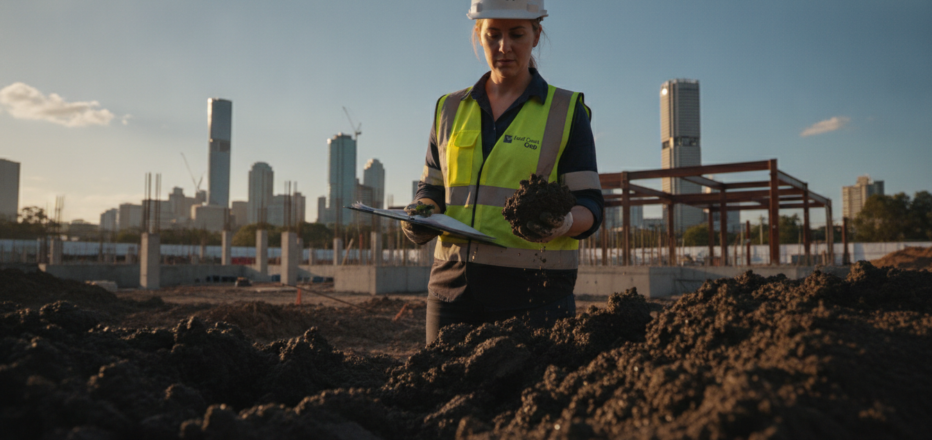
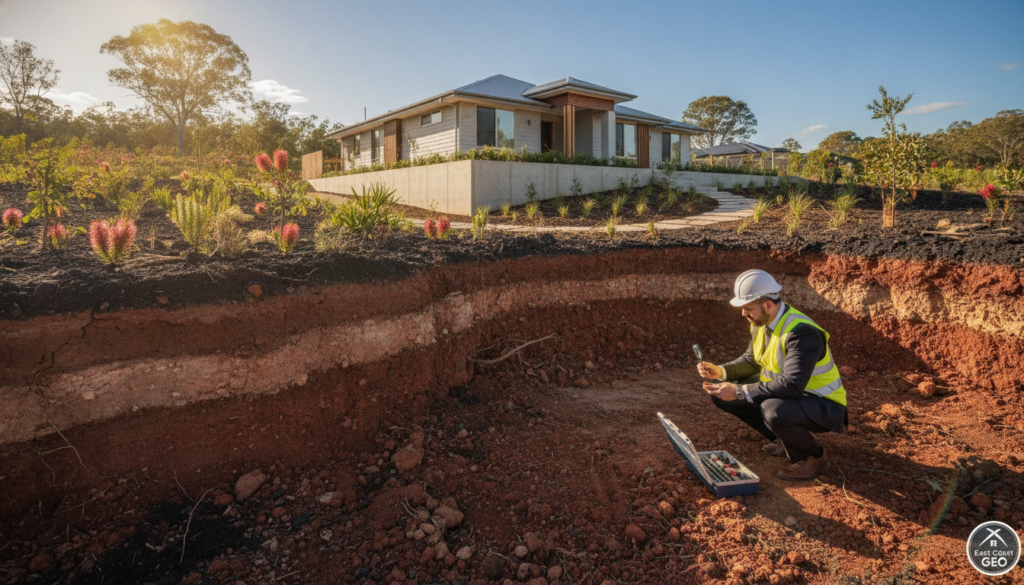
A detailed landscape of Brisbane featuring the distinctive 'Blackjack' clay foundation, showcasing its rich, reddish-brown earth tones. In the foreground, display a cross-section of the soil, revealing layers of reactive clay and some scattered native vegetation that thrive in this environment. In the middle ground, present a modest, contemporary home built on a solid foundation, surrounded by well-maintained landscaping. The background should illustrate a clear blue sky with Queensland's characteristic sunlight casting warm, natural lighting on the scene. Add a professional engineer in business attire examining soil samples, symbolizing the importance of understanding this reactive soil. The composition conveys a serene yet informative atmosphere, embodying the significance of 'Blackjack' clay in home construction, with a subtle logo of "East Coast Geo" in the corner.

Understanding Reactive Soil Classifications in Australia

Australia uses AS 2870 to classify soil movement. Engineers use this system to design foundations that can handle the ground.

The classifications range from stable to highly problematic. Each one tells builders about the risks involved.

Soil Class Reactivity Level Typical Ground Movement
Class A Stable (sand/rock) Minimal, under 10mm
Class S Slightly reactive 10-20mm
Class M Moderately reactive 20-40mm
Class H1/H2 Highly reactive 40-75mm
Class E/P Extremely reactive/problem soil Over 75mm

Blackjack clay usually falls between Class H1 and Class E. This is a big range of movement for any foundation to handle without proper design.

Why Brisbane’s Clay Soils Are Notoriously Reactive

Brisbane’s geology creates a perfect storm for reactive ground conditions. Much of the region sits on alluvial deposits and mudstone-derived clays formed over thousands of years near rivers and creeks.

These clay-heavy soils absorb water readily during Brisbane’s wet season, then dry out and contract during long stretches without rain. This seasonal wet-dry cycle repeats year after year, gradually stressing whatever sits on top of it.

Suburbs like Chermside, Kenmore, and much of the western corridor sit squarely within these reactive soil brisbane zones. If your property falls within one of these areas, your foundation design needs to account for this ongoing ground movement from the very start.

2. The Real Cost of Ignoring Reactive Soil Conditions

Reactive clay is sneaky. It doesn’t warn you loudly. Instead, it quietly damages your home over time. By the time you notice, the damage has been building for years.

Knowing what to look for and the cost of fixing it helps you act fast. Catching problems early means avoiding big repair bills.

Common Signs of Foundation Damage from Clay Movement

Brisbane’s clay soils change with the weather. They swell when wet and shrink when dry. This movement puts pressure on your home’s foundation.

  • Hairline cracks in brick mortar joints, often stepping diagonally across a wall
  • Doors and windows that suddenly stick or won’t close properly
  • Floors that feel noticeably sloped or uneven underfoot
  • Gaps opening up around skirting boards or ceiling cornices

Each sign alone might seem small. But together, they often mean your foundation is moving.

Financial Impact of Reactive Soil Foundation Failures

Fixing a reactive clay foundation issue isn’t cheap. Costs range from $15,000 to $50,000 or more. This depends on the damage and your home’s size.

On the other hand, a geotechnical assessment during design costs only a few thousand dollars. It’s a much better deal.

“An ounce of prevention is worth a pound of cure.”

Benjamin Franklin

That saying is true for Brisbane foundations. Spending on soil testing and design upfront saves money. It also saves you from the stress of watching your home shift season after season.

3. Case Study: A Brisbane Home Built on Blackjack Clay

A 650-square-metre block in Ferny Grove became a lesson for Brisbane homeowners. A family wanted a single-storey brick home, like their neighbours. But, they didn’t know the ground beneath was different.

Property Background and Site Conditions

The block was surrounded by homes from the late 1970s and early 1980s. Footpaths had shifted, and fences leaned. It looked like a typical older suburb.

Two mature gum trees stood near the rear. Their roots pulled moisture from the clay soil. Drainage was poor, with water pooling after rain.

During site clearing, the soil was dark, dense, and sticky. This was a sign of blackjack clay. It made builders question the usual house foundations.

Initial Warning Signs Before Foundation Assessment

Before pouring concrete, red flags appeared. A neighbour’s house had fine cracks and sticking doors. These signs were a warning.

The sticky soil and neighbour’s issues convinced the builder. A standard slab wouldn’t work. Several clues pointed to a problem:

  • Hairline cracks above doorways in the neighbour’s house
  • Doors and windows sticking in wet seasons
  • Uneven or cracked footpaths on the street
  • Dark, dense, sticky soil during site clearing
  • Mature gum trees near the building site

The homeowners got a full geotechnical assessment. This decision was crucial for the design. It’s a proactive step to avoid costly surprises.

4. Reactive Soil Foundation Design Brisbane Experts Use to Assess Risk

Before designing a foundation for reactive clay, you must know its reactivity level. Every build in Brisbane starts with soil testing, not guesses.

Engineers use this data to predict how much the ground will swell and shrink. They then design footings strong enough to withstand the clay’s challenges.

Soil Testing and Classification Process

Geotechnical engineers start by drilling holes across your site. In Brisbane, clay can vary greatly, so testing multiple spots is crucial.

They test each sample for plasticity index, showing how much the clay expands and shrinks. Moisture content is also measured at different depths, as dry-season readings differ from those after rain.

Lab results help calculate soil reactivity, following Australian Standard AS 2870. This figure determines the depth and strength of your footings.

Determining Class H Soil Ratings and What They Mean

After testing, your site gets a classification from A (stable) to E (extremely reactive). Most Brisbane sites are Class H, meaning “highly reactive.”

A Class H rating means the ground can cause cracks and jam doors if footings aren’t right. It’s a serious rating but not a reason to panic. It guides your engineer’s design.

“Reactive soil doesn’t cause foundation failure — poor design for reactive soil does.”

Class H1 vs Class H2 Soil Classifications

Class H soil has two levels, and knowing the difference is key for footing planning.

Classification Ground Movement Range Typical Footing Approach Design Implication
Class H1 40–60mm surface movement Stiffened raft slab or shallow piers Standard reinforced footings usually cope well
Class H2 Over 60mm surface movement Deep piers, often 2–3 metres or more Pier and beam systems with suspended floors

An H1 rating means moderate movement, which a stiffened slab can handle. But an H2 rating signals extreme movement. This often requires a pier and beam foundation to lift your home above the clay.

5. Engineering Solutions Implemented for This Blackjack Clay Site

The soil at this site swells and shrinks a lot, making slab-on-ground construction a bad idea. The geotechnical report showed the site is Class H, which means standard footings won’t work.

The design team came up with a special solution for this problem. They engineered a system that will keep the house stable for years, no matter what the clay does.

Why Pier and Beam Foundation Design Was Selected

A slab on top of the clay is risky because it moves a lot. This movement can be over 40mm in one season.

Pier and beam foundations are better for this site. They go straight through the clay to reach solid ground below.

This design lets the house move with the ground instead of fighting it. It’s a key difference for a house on expansive soil.

Depth and Placement of Foundation Piers

The geotechnical data was crucial for the design. Piers were drilled deep to reach stable ground.

The spacing and size of the piers were based on the house’s load. Load-bearing walls have closer piers, while other areas have wider gaps.

Pier Element Specification Purpose
Bore depth 3.2m – 4.5m below natural ground level Reach stable soil beyond the reactive zone
Pier diameter 450mm standard, 600mm at load points Match bearing capacity to structural load
Spacing 2.4m centres under bearing walls Distribute load evenly across the footprint
Reinforcement N16 steel bar cages, full pier length Resist lateral clay pressure and uplift

Additional Reinforcement Techniques Used

Just piers aren’t enough. The team added extra measures to protect the house from clay movement.

  • Articulated masonry joints that allow brickwork to flex slightly without cracking
  • Flexible plumbing connections that absorb ground movement without pipe failure
  • Root barriers installed near garden beds to stop trees drawing moisture from beneath the slab
  • Stiffened edge beams around the perimeter to resist differential heave at the foundation’s outer edge

These details make the foundation strong against Brisbane’s clay. Every part is based on the site’s soil report.

6. Step-by-Step Build Process: From Design to Completion

Building a home on reactive clay takes careful steps to protect your investment. Each step is crucial, and skipping any is not an option. Here’s how the build went for a Brisbane property, from start to finish.

Site Preparation and Excavation Considerations

Before digging, the site needed special preparation for the clay. Crews removed topsoil in stages to avoid exposing too much clay to the weather.

They used silt fencing and diversion drains to keep water away. They also covered the clay with plastic sheeting before rain, as rain can swell the clay and mess up the piers.

This careful handling of moisture during excavation is key. Skipping it could undo all the engineering work before construction even starts.

Foundation Construction Timeline

Piering work took longer than usual, due to the depth and number of piers. Each pier was drilled, reinforced, and poured one by one. This allowed the concrete to cure properly before moving on.

After the piers were strong, the beam and slab work began. This extra time made the foundation more stable in the long run.

Construction Phase Typical Duration Key Activity
Site Preparation & Excavation 3–4 days Staged topsoil removal, erosion control, moisture protection
Pier Drilling & Pouring 5–7 days Deep piers drilled, reinforced, and cured
Beam & Slab Construction 4–6 days Beams tied into cured piers, slab poured
Curing & Inspection 3–5 days Concrete curing, engineer and council sign-off

Quality Assurance and Inspection Checkpoints

There were many checkpoints to keep the build on track. The structural engineer checked the pier depths before pouring concrete. This ensured each pier was deep enough.

Council inspectors reviewed the foundation at key points, as required by Queensland laws. An independent certifier also checked for compliance, adding extra assurance.

This detailed inspection process meant no stage moved forward without approval. It shows that a well-managed build on reactive clay needs more than one person’s approval.

7. The Results: How Proper Foundation Design Protected This Home

The real test of any solution isn’t just when it’s built. It’s every season that follows. This Brisbane home has weathered many wet and dry cycles.

The results are clear. No cracks, no sticking doors, no uneven floors.

Performance After Seasonal Soil Movement

Brisbane’s summer storms brought heavy rain, swelling the clay beneath. Winter’s dry heat then shrunk it back.

Yet, the piered foundation remained steady. Homeowners report no movement in doors, windows, or walls.

Floor levels checked months apart showed no shift. This is what good reactive soil solutions aim for—stability no matter the soil’s state.

Compare this with neighbours on standard slab footings. Several have cracked and doors no longer close right.

Cost Comparison: Proactive Design vs Reactive Repairs

Getting the foundation right from the start costs more. But, the savings over time are clear. Reactive repairs can be very costly for Brisbane homeowners.

Cost Factor Proactive Piered Design Reactive Slab Repair
Upfront foundation cost $8,000–$15,000 extra Standard slab cost only
Underpinning after damage Not required $20,000–$50,000+
Ongoing crack repairs None recorded $2,000–$5,000 per event
Resale value impact Positive, structural warranty intact Negative, disclosure required

Years of patch repairs add up. The extra cost in proper piering is worth it. Homeowners avoid stress, disruption, and ongoing costs.

This case shows a simple truth. Spending more on real reactive soil solutions at design time saves a lot later. It saves money and gives peace of mind.

8. Protecting Your Own Home from Reactive Clay Damage

Planning a new build or living in an older Brisbane home? Protecting your foundation is key. Asking the right questions can save you from expensive repairs later.

Let’s explore what to ask, watch for, and when to call for help.

Key Questions to Ask Your Foundation Engineer

Before finalising any building or renovation plans, talk to your engineer. These conversations are crucial, and a good engineer will be happy to discuss them with you.

  • What soil classification applies to my block, and how reactive is it?
  • What foundation system do you recommend, and why does it suit this site?
  • How deep will the piers need to go to reach stable ground?
  • What drainage measures should I put in place around the slab?
  • How will seasonal moisture changes affect this design over time?

A reliable foundation engineer in Brisbane will explain each answer clearly and simply.

Warning Signs Every Brisbane Homeowner Should Know

You don’t need to be an engineer to spot trouble early. Look out for these common signs of clay movement affecting your home.

  • Cracks appearing in brickwork, cornices, or plaster walls
  • Doors and windows that suddenly stick or won’t close properly
  • Uneven or noticeably sloping floors
  • Gaps forming between walls and ceilings
  • Cracked or lifting paving near the foundation edge

Seeing these signs doesn’t mean disaster is imminent. But together, they suggest a professional check is needed.

When to Call in a Foundation Engineer Brisbane Professional

If you see any of these signs, act fast. Reactive clay problems rarely fix themselves, and early action is cheaper than delayed repairs.

For anyone planning a new build in Brisbane, getting a qualified engineer from the start is wise. It ensures your home can handle the soil’s challenges.

Call us on 07 3713 4900 for an assessment and peace of mind about your foundation.

Your home is a big investment. A quick talk with a Brisbane foundation engineer could save you stress and money in the long run.

9. Conclusion

Blackjack clay isn’t something you can wish away, but it’s also not something that needs to derail your building plans. The Brisbane home in this case study proves the point clearly. What started as a genuine risk turned into a stable, long-lasting result because the right questions got asked early and the right engineering followed.

Good reactive soil foundation design in Brisbane comes down to understanding your site, testing properly, and building a foundation system that matches what the ground actually does throughout the year. Skip these steps and you’re gambling with your home’s future. Get them right and you’re set up for decades without drama.

Every property sitting on reactive clay tells its own story, and yours deserves the same careful attention this case study received. Whether you’re planning a new build, working through renovations, or noticing cracks that worry you, sorting out the soil question now saves you grief later.

Spending a bit more on solid engineering upfront always works out cheaper than fixing a damaged slab down the track. Your home should be built to handle whatever Brisbane’s clay throws at it, not just get through the first few years unscathed.

Call us on 07 3713 4900 today and let’s make sure your foundation is ready for the long haul.

FAQ

What exactly is blackjack clay and why is it such a big deal for Brisbane homes?

Blackjack clay is a dark, sticky soil found in Brisbane’s suburbs. It swells when wet and shrinks when dry. This can stress your house. Knowing about it is key to protecting your home.

How do I know if my block has reactive soil?

You need a soil test done by a geotechnical engineer. They’ll check the soil through boreholes and tests. This tells you if your soil is stable or not.

What’s the difference between Class H1 and Class H2 soil ratings?

Both are reactive, but H1 has moderate movement, while H2 has extreme. This affects how your foundation is designed.

What are the warning signs that my home might already have foundation issues from clay movement?

Look for small cracks in walls, doors that stick, and uneven floors. These signs mean the ground is moving.

How much can reactive clay foundation repair actually cost?

Repair costs can be high, tens of thousands of dollars. But, a good design upfront is cheaper and smarter.

Why would an engineer recommend a pier and beam foundation over a standard slab-on-ground?

Engineers choose pier and beam for Class H sites. It anchors into stable soil, giving your home a solid base.

What other reactive soil solutions are used alongside piering?

Solutions include special masonry, flexible plumbing, and root barriers. These work together to make your foundation strong.

Does building on reactive clay take longer than a standard build?

Yes, it takes longer. Piering needs time to cure, and site prep is needed. But, the stability it offers is worth it.

What questions should I ask a foundation engineer before building or renovating?

Ask about soil classification, recommended foundations, and what’s in the geotechnical report. This helps you make informed decisions.

When should I call in a foundation engineer brisbane professional?

Call one if you see cracks, sticking doors, or uneven floors. Or if you’re planning a new build or renovation. Call us on 07 3713 4900 for an assessment.

September 3, 2026 Comments (0) Uncategorized

Read more

East Coast Group

Civil, Structural, Geotechnical & Piling Services since 1994.

07 3713 4900

Quick Links
  • Home
  • About Us
  • Our Companies
  • Our Services
  • Areas We Serve
  • Gallery
  • Blog
  • Contact Us
Contact Information
Phone
07 3713 4900
Email
manager@eastcoast-geotech.com.au
Address
18A Iris Place, Acacia Ridge, Brisbane QLD 4110
Postal Address
PO Box 31, Acacia Ridge DC QLD 4110
Opening Hours
Monday7:30 am – 5:00 pm
Tuesday7:30 am – 5:00 pm
Wednesday7:30 am – 5:00 pm
Thursday7:30 am – 5:00 pm
Friday7:30 am – 5:00 pm
SaturdayClosed
SundayClosed

© 2026 East Coast Group of Companies. All rights reserved.

Terms of Use · Privacy Policy